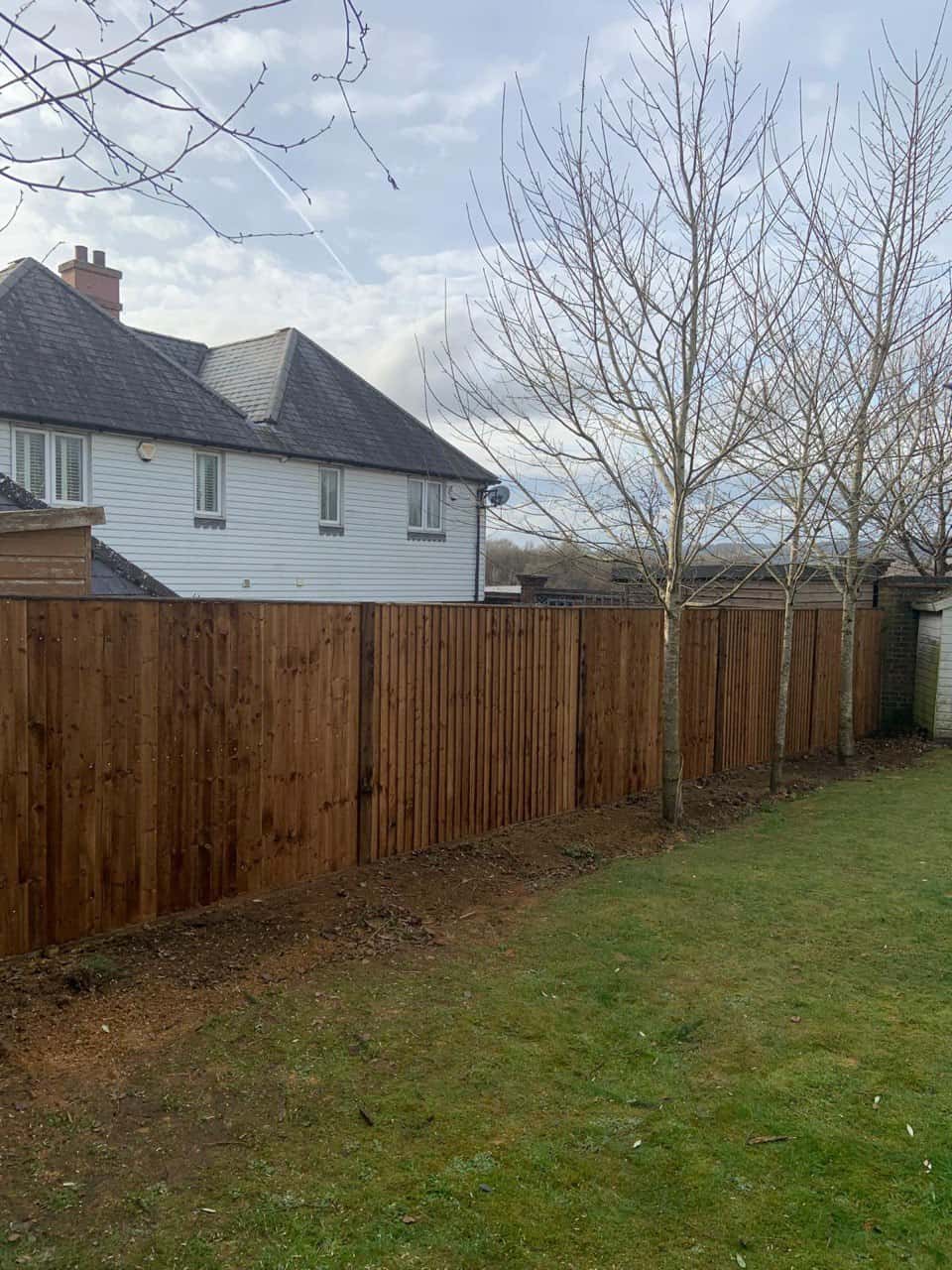
How Can Bespoke Fencing Solve Privacy Problems Around Raised Gardens?
A raised garden can create an attractive and distinctive outdoor space, but differences in ground level can also make privacy more difficult to achieve. Standard fencing that works perfectly well on level ground may provide less screening when a patio, lawn or seating area sits higher than the surrounding boundary. From the elevated position, neighbouring spaces can become more visible and the garden may feel more exposed than expected.
For homeowners in March, Cambridge, bespoke fencing provides an opportunity to design the boundary around the actual layout of the garden. Rather than relying on standard panels alone, the fencing can be planned to respond to changes in level, awkward sections and the areas where additional screening is genuinely required.
Why Raised Gardens Can Create Privacy Problems
Privacy is influenced by viewing angles as much as by the presence of a fence.
When part of a garden is raised, anyone using that area is positioned higher relative to the surrounding boundaries. A fence that provides adequate screening from the lower part of the garden may therefore feel much less effective from an elevated patio or lawn.
This can be particularly noticeable around:
- Raised seating areas
- Elevated patios
- Terraced gardens
- Raised lawns
- Steps between different garden levels
- Sloping boundaries
- Outdoor entertaining areas
The solution needs to consider how people actually use the garden rather than simply installing the same fencing around every boundary.
Standard Fence Panels Do Not Always Suit Changes in Level
Standard fencing works best where boundaries and ground conditions are relatively straightforward.
A raised or multi-level garden can be more complicated. Installing identical panels without considering changing levels may create an uneven appearance or leave particular areas more exposed than others.
Bespoke fencing allows the layout to respond to these differences.
Panel dimensions, positioning and transitions can be planned around the garden so that the finished boundary feels deliberate rather than adapted as an afterthought.
Bespoke Fencing Can Target the Areas That Need More Screening
Not every section of a raised garden necessarily requires the same degree of privacy.
A seating area may need considerably more screening than a pathway or planted section, for example. Designing the fence around these individual requirements can create a more practical result.
The first step is to identify where privacy is actually being lost.
This may involve considering:
- The position of raised areas.
- Where people normally sit or spend time.
- The direction of the most exposed views.
- Changes in ground level along the boundary.
- Existing garden features.
- How the fencing will look from different parts of the property.
This site-specific approach is one of the main advantages of bespoke fencing.
Different Panel Heights Can Follow the Garden More Naturally
Where ground levels change, using one continuous fence height without considering the surroundings can produce an awkward result.
A bespoke design can respond more carefully to variations in the garden.
Depending on the layout, different fencing sections can be positioned so that the overall boundary follows the changing levels while maintaining useful screening where required.
The objective is not necessarily to make every part of the fence as dominant as possible. Instead, the design should provide appropriate privacy while remaining proportionate to the garden.
Bespoke Panels Can Fit Awkward Boundary Sections
Raised gardens frequently contain features that make standard panel installation less straightforward.
Steps, retaining structures, corners, narrow sections and changes in direction can all influence the available space.
Bespoke fencing can be designed around these features rather than forcing standard-sized panels into unsuitable positions.
This can help avoid:
- Unnecessary gaps
- Awkward transitions
- Poorly aligned sections
- Inconsistent screening
- Untidy finishing around garden features
Careful measurement and planning are particularly important where several changes occur along the same boundary.
Privacy Can Be Improved Without Making the Garden Feel Enclosed
One concern homeowners sometimes have about privacy fencing is that additional screening could make the garden feel overly enclosed.
Good fencing design should consider both privacy and the overall character of the outdoor space.
Rather than treating the fence purely as a visual barrier, its proportions and style can be selected to complement the garden. Strategic screening around the most exposed sections may sometimes provide a better result than creating an unnecessarily dominant boundary everywhere.
The aim is to make the garden feel more comfortable and private without losing its sense of space.
Fencing Can Help Define Different Garden Levels
Bespoke fencing can also contribute to the visual structure of a raised garden.
Where an outdoor space contains several levels, clear boundaries can help different areas feel more organised. Fencing can form part of the transition between these spaces and reinforce the overall garden layout.
This can be particularly effective where a raised patio, lawn or seating area already functions as a distinct part of the garden.
Well-planned fencing therefore contributes to both privacy and appearance.
Seating Areas Deserve Particular Attention
Privacy problems often become most noticeable when people are sitting rather than simply walking through the garden.
A raised seating area may provide direct views beyond the existing boundary, while also feeling more exposed from surrounding viewpoints.
Because these are areas where homeowners may spend considerable time relaxing or entertaining, they should be considered carefully when planning new fencing.
A bespoke layout can concentrate screening around the areas where it will make the greatest practical difference.
Good Fencing Design Considers Sightlines
One of the most useful aspects of planning privacy fencing is understanding sightlines.
Looking at a garden solely from ground level beside the boundary may not reveal where the real privacy problems occur. The view should also be considered from raised patios, seating positions and other regularly used areas.
This allows the fencing to address actual lines of sight rather than relying on assumptions.
For raised gardens, this distinction can make a significant difference to the effectiveness of the finished installation.
Posts and Supporting Components Matter
Bespoke fencing still depends on strong underlying construction.
Panels may receive most of the visual attention, but posts and supporting components are essential to the stability of the finished fence.
Where the layout includes changes in height or direction, careful positioning becomes particularly important.
Professional installation considers:
- Ground conditions
- Post positioning
- Panel dimensions
- Changes in level
- Boundary alignment
- Connections between different sections
A well-designed fence should not only provide the required screening but also form a stable, coherent structure.
Existing Landscaping Can Be Incorporated into the Design
A new privacy fence does not necessarily require the surrounding garden to be redesigned.
Bespoke installation can take account of established landscaping and other features already contributing to the outdoor space.
This may include:
- Planted borders
- Shrubs
- Raised beds
- Paths
- Patios
- Steps
- Existing garden structures
Planning the fencing around these elements can help the finished installation feel integrated with the property rather than appearing disconnected from the garden.
Bespoke Fencing Can Improve the Overall Appearance
Privacy may be the original reason for considering new fencing, but a carefully planned installation can also improve how the complete garden looks.
A boundary that follows the garden properly can create cleaner lines and provide a more finished backdrop for planting, lawns and paved areas.
This is particularly valuable in raised gardens, where boundaries can be highly visible from different levels.
Consistent workmanship and thoughtful transitions between fencing sections help create a more cohesive appearance.
Why Professional Measurement Is Important
Small differences in level can become surprisingly noticeable across a long boundary.
Accurate measurement is therefore essential before bespoke fencing is manufactured or installed.
Professional assessment allows the installer to identify:
- Changes in ground height
- Boundary dimensions
- Awkward corners
- Existing structures
- Areas requiring additional privacy
- Suitable positions for posts and panels
This information can then be used to plan the fencing around the actual site rather than adapting the design during installation.
Bespoke Fencing Is About Solving the Specific Problem
The strongest reason for choosing bespoke fencing is that privacy problems are rarely identical from one property to another.
One garden may have an elevated patio overlooking a boundary. Another may have several stepped levels. A third may contain an awkward corner where standard fencing leaves an unwanted sightline.
A tailored solution starts with the problem and develops the fencing around it.
This avoids installing unnecessary screening while ensuring the areas that genuinely require privacy receive appropriate attention.
Professional Bespoke Fencing in March
At Fast Fix Fencing March, we provide professional fencing services throughout March, Cambridge. For properties with raised or uneven gardens, we can assess the layout and determine how bespoke fencing could provide more effective privacy while complementing the existing outdoor space.
Our approach considers changes in level, sightlines, boundary dimensions and the way different parts of the garden are used. This allows the fencing to be planned around the property rather than relying on a standard arrangement that may not address the actual privacy problem.
Whether you need additional screening around a raised seating area or a complete fencing layout designed around changing garden levels, careful planning and professional installation can create a practical and well-finished result.
Conclusion
Raised gardens can create unusual privacy challenges because changes in ground level alter sightlines across and beyond the property boundary. Standard fencing may provide adequate screening in one section while leaving an elevated patio, lawn or seating area feeling exposed.
Bespoke fencing provides greater flexibility by allowing panel positioning, dimensions and transitions to respond to the actual garden. By considering sightlines, raised areas, existing landscaping and the sections where privacy matters most, a tailored design can provide effective screening without unnecessarily overwhelming the outdoor space.
For homeowners in March, Cambridge, Fast Fix Fencing March provides bespoke fencing solutions designed around individual garden layouts. If a raised section of your garden feels too exposed, contact our team to discuss how professionally planned fencing could create a more private, comfortable and well-defined outdoor space.
Call us on: 01354 707 492
Click here to find out more about Fast Fix Fencing March
Click here to complete our contact form and see how we can help with your fencing needs.