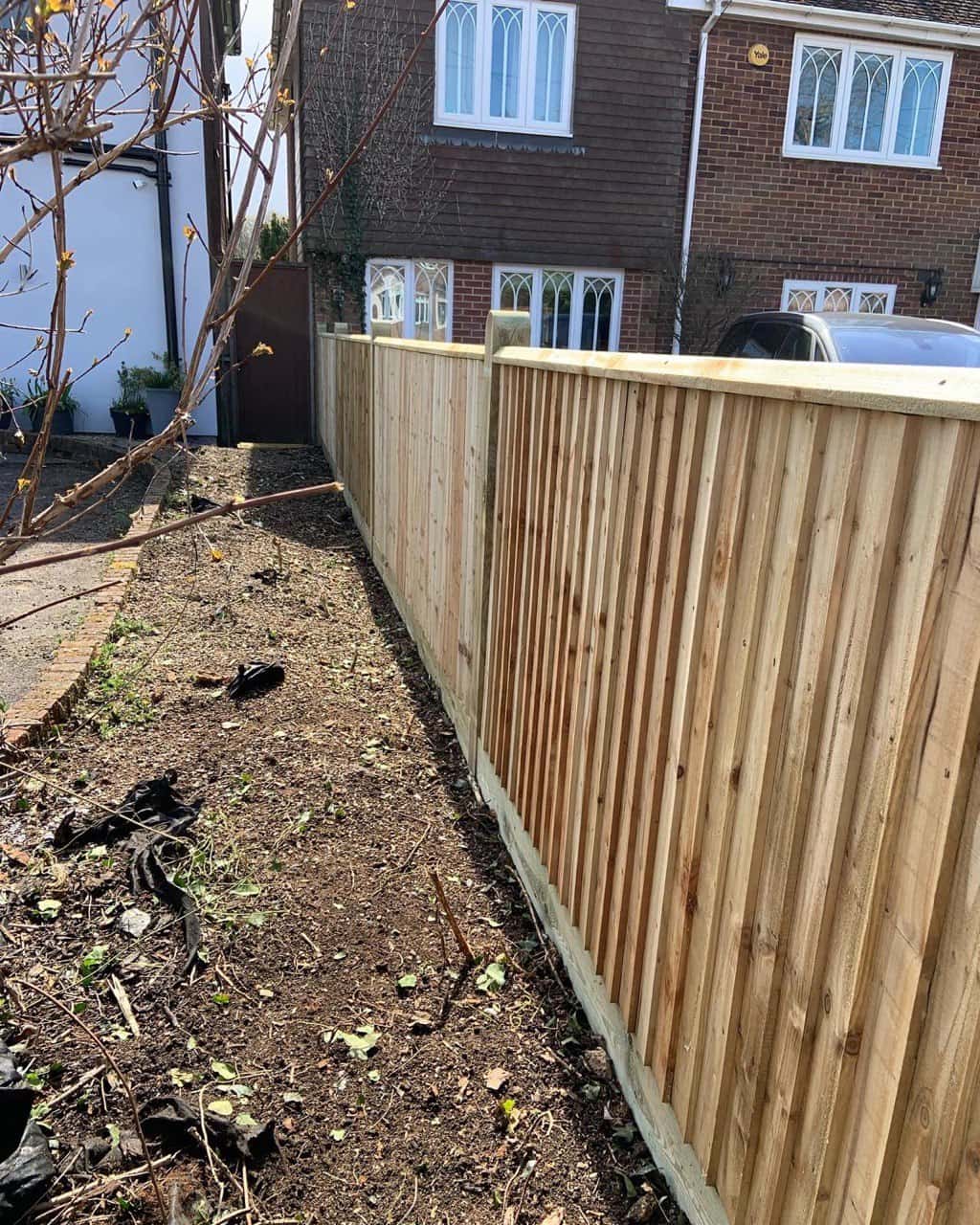
Why Is Post & Rail Fencing a Practical Choice for Larger Boundaries?
Larger boundaries need fencing that provides clear definition without making an open area feel unnecessarily enclosed. The chosen design must also suit the land, intended use and level of containment required.
Post and rail fencing is a practical option because it uses a straightforward structure of upright posts and horizontal rails. This creates a strong, open boundary that can follow long distances and changes in ground level. It is commonly considered for spacious gardens, paddocks, fields and properties where visibility across the land remains important.
What Makes Post and Rail Fencing Suitable for Long Boundaries?
The simplicity of post and rail fencing is one of its main strengths. Individual sections can be installed in sequence across extensive boundaries without creating the heavy visual effect associated with solid panels.
Its practical advantages can include:
- Clearly defining large areas
- Retaining open views
- Following gradual slopes and uneven land
- Adapting to different boundary layouts
- Providing a robust structure
- Working alongside suitable gates
- Allowing damaged components to be repaired individually
- Supporting additional mesh where greater containment is needed
The installation still needs careful planning. The correct post spacing, rail arrangement and fixing method will depend on the purpose of the fence and the conditions of the site.
It Defines the Boundary Without Blocking the View
Solid fencing can make a large outdoor space feel divided or restricted. Post and rail fencing marks where one area ends and another begins while allowing light and visibility to pass through.
This open design can be particularly useful where homeowners want to retain views across a garden or adjoining land. It also makes it easier to observe different sections of the property without the fence becoming a visual obstruction.
The number of rails can be selected according to the desired appearance and function. A professional assessment helps determine which arrangement will create a proportionate and effective boundary.
It Can Follow the Shape of the Land
Long boundaries are rarely completely straight and level. They may include gentle slopes, changes in direction or areas where the ground rises and falls.
Post and rail fencing can be set out to follow these variations without requiring every section to remain at one fixed height. Careful installation helps maintain a consistent visual line while accommodating the natural profile of the land.
Accurate setting out is essential. Posts that are positioned irregularly or installed at inconsistent depths can make the finished fence appear uneven and reduce its stability.
Strong Posts Provide Essential Support
The reliability of post and rail fencing depends heavily on the posts. They carry the rails, resist movement and help the complete fence remain aligned.
Post depth and spacing should reflect the ground conditions, fence height and likely exposure. Corners, ends and gate openings may need additional consideration because these points can experience greater forces than a straight section.
Installing strong rails onto poorly positioned posts will not create a dependable fence. Good preparation and accurate construction are therefore just as important as the quality of the visible materials.
It Can Be Adapted for Greater Containment
The open spaces between rails make standard post and rail fencing suitable for marking boundaries, but rails alone may not contain smaller animals or prevent wildlife from passing through.
Where greater containment is required, appropriate wire mesh can be fixed to the fence. This preserves much of the open appearance while creating a more effective barrier.
The mesh type, height and fixing method should be selected for the intended use. It must be properly tensioned and securely attached so that it works with the timber framework rather than pulling it out of alignment.
Gates Can Be Incorporated Naturally
Larger boundaries often require one or more access points for vehicles, machinery or pedestrians. Post and rail fencing can be planned around gates so that the entrance forms part of the overall layout.
Gate posts must be capable of supporting the weight and movement of the gate without leaning. The width and position of the opening should also reflect how it will be used.
Planning access before the fence is installed avoids awkward alterations and helps maintain practical movement around the property.
Individual Components Can Be Repaired
If a rail becomes damaged, it may be possible to replace that component without rebuilding a long section of otherwise sound fencing. The same principle can apply to isolated posts, although nearby rails may need to be temporarily removed during the repair.
Regular checks can identify:
- Loose or split rails
- Posts beginning to lean
- Movement around gate openings
- Damaged fixings
- Timber remaining in contact with vegetation
- Mesh becoming loose or distorted
Addressing localised deterioration promptly helps prevent movement from placing additional strain on adjoining sections.
Maintenance Supports Long-Term Performance
Timber fencing remains exposed to changing weather conditions throughout the year. Appropriate treatment and routine maintenance can help protect its appearance and condition.
Vegetation should be prevented from placing constant pressure on the rails. Soil, leaves and other damp material should not be allowed to build up around the posts, as prolonged moisture can accelerate deterioration.
The fence should also be inspected after periods of strong wind or when nearby land use changes. Early repairs are generally more straightforward than correcting a long boundary after several sections have moved.
When Another Fencing Style May Be More Suitable
Post and rail fencing is not the right solution for every property. It provides limited privacy and, without mesh, does not create a fully enclosed barrier.
A solid fencing system may be more appropriate where screening, reduced visibility or a more enclosed garden is the main objective. Different sections of the same property can also use different fencing styles where their functions vary.
The most suitable choice should be based on:
- The purpose of the boundary
- The need for privacy or visibility
- The type of containment required
- Ground levels and site exposure
- Gate and access requirements
- The appearance of the surrounding property
A site assessment makes it easier to determine whether post and rail fencing will meet these needs effectively.
Professional Installation Matters on Larger Sites
Small inaccuracies become more noticeable across a long fence line. Incorrect spacing, inconsistent post depth or poor alignment can affect both the appearance and stability of the completed boundary.
Professional installation begins with a clear layout and consideration of the ground conditions. Posts, rails, corners and access points can then be positioned as one coordinated system.
For larger boundaries in March, Cambridge, this planned approach helps create a fence that is practical, well-proportioned and suited to its surroundings.
Conclusion
Post and rail fencing is a practical choice for larger boundaries because it provides clear definition while retaining an open outlook. It can follow changes in the land, incorporate gates and support additional mesh when greater containment is required.
Its effectiveness depends on correct setting out, secure posts and materials suited to the intended use. Fast Fix Fencing March provides professional post and rail fencing services in March, Cambridge. To discuss the requirements of your boundary, contact the team to arrange an assessment.
Call us on: 01354 707 492
Click here to find out more about Fast Fix Fencing March
Click here to complete our contact form and see how we can help with your fencing needs.