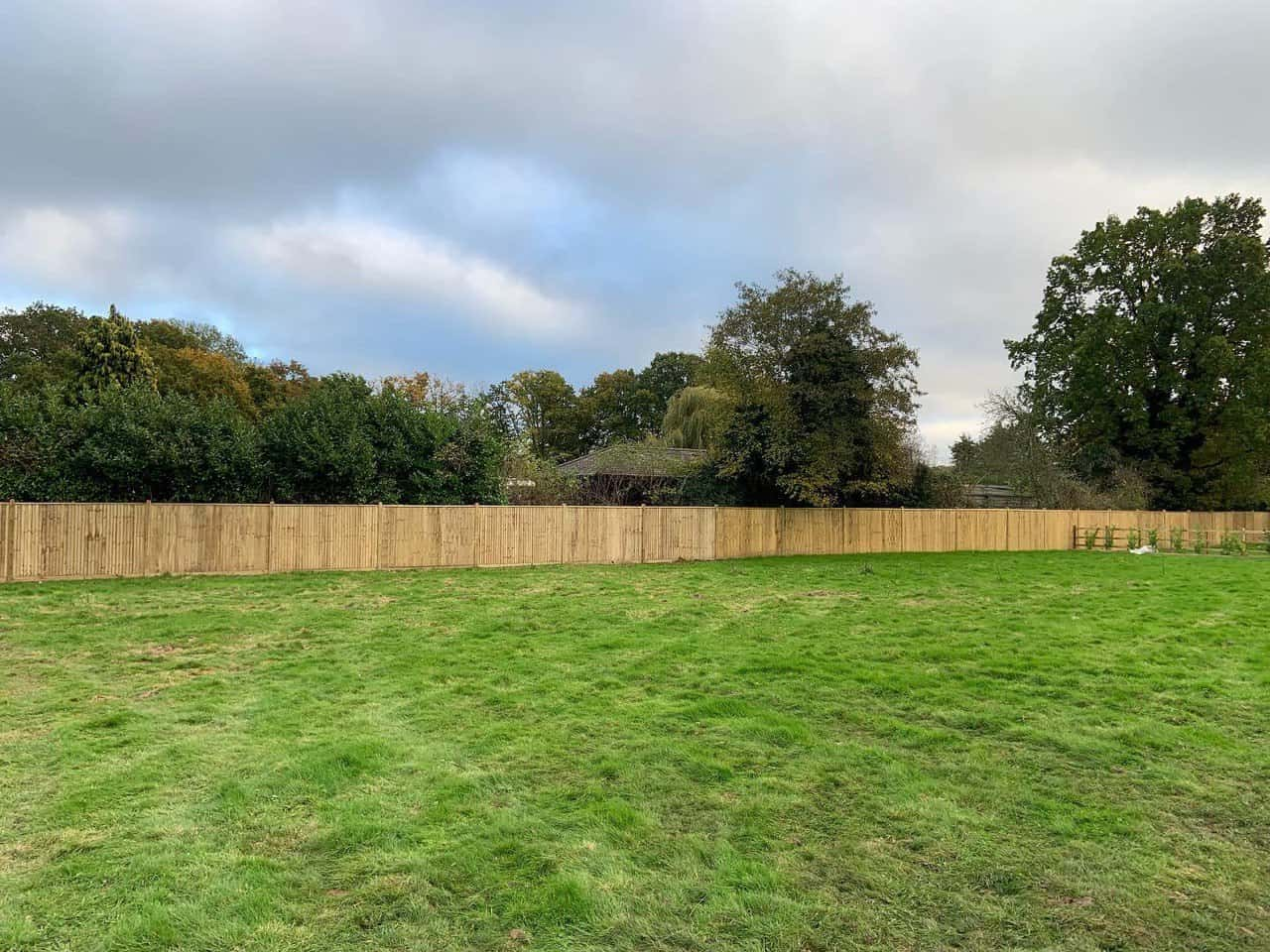
How to Choose Between Overlapping and Closeboard Wooden Fence Panels
Choosing the right wooden fence panels can make a significant difference to the privacy, appearance and durability of your garden boundary. Two popular options are overlapping and closeboard fencing. Although both provide an effective way to enclose an outdoor space, they differ in their construction, strength and overall finish.
For homeowners in March, Cambridge, understanding these differences can help you select fencing that suits your garden, property and practical requirements. Fast Fix Fencing March can help you choose a suitable solution and ensure your new fence is installed to a professional standard.
What Is Overlapping Wooden Fencing?
Overlapping fence panels, sometimes called lap panels, are made from horizontal timber boards that overlap one another. This construction creates a solid-looking boundary that offers a good level of privacy.
One of the main advantages of overlapping fencing is its straightforward design. The panels provide a traditional appearance that works well in many residential gardens, making them a practical choice for homeowners who want a simple and attractive boundary.
However, the thinner horizontal boards can be more vulnerable to movement or damage in exposed conditions, particularly if the panels are poorly manufactured or inadequately supported. The quality of the timber, frame and installation therefore plays an important role in how well the fence performs over time.
What Is Closeboard Wooden Fencing?
Closeboard fencing is constructed using individual vertical timber boards, known as featheredge boards, which are fitted closely together and fixed to horizontal supporting rails. The boards slightly overlap to create a strong, continuous boundary.
Unlike standard overlapping panels, closeboard fencing is generally assembled from individual components. This construction allows the fence to be adapted to different garden layouts, heights and ground levels.
Its substantial structure makes it a popular choice for homeowners who want a robust and long-lasting wooden boundary. Individual boards can also be replaced when necessary, which can make maintenance more straightforward if a particular section becomes damaged.
Comparing Strength and Durability
Strength is an important consideration when choosing between these two fencing styles.
Closeboard fencing is generally regarded as the more robust option because of its construction. The individual boards are supported by horizontal rails and securely fixed to the framework. When installed correctly with suitable posts and foundations, this arrangement can provide a sturdy boundary.
Overlapping panels can also provide reliable garden screening, but their durability depends heavily on the quality of the panel construction and the condition of the supporting posts. In particularly exposed gardens, it is worth considering how well the panels and their framework will withstand wind pressure.
For properties in March, the surrounding conditions and the position of the garden should be considered before deciding which option is most appropriate.
Which Fence Offers Better Privacy?
Both overlapping and closeboard fencing are designed to provide privacy by creating a continuous wooden barrier.
Overlapping panels have horizontal boards that sit over one another, limiting gaps through which people can see. Closeboard fencing achieves a similar result through closely fitted vertical boards.
The main difference is the appearance of the finished boundary. Overlapping panels have a more uniform horizontal pattern, while closeboard fencing has a distinctive vertical finish.
If privacy is your main priority, either option can be suitable when installed properly. The height, positioning and overall condition of the fence will also influence how effectively it screens the garden.
Appearance and Suitability for Your Garden
The right fencing should complement the style and layout of your outdoor space.
Overlapping panels offer a familiar, traditional appearance and work well along straightforward garden boundaries. Their consistent panel design can create a neat finish across larger areas.
Closeboard fencing has a more substantial, handcrafted appearance. Because it is built using individual boards, it can be adapted more easily to sloping ground or garden boundaries that are not perfectly level.
Consider the appearance of your existing garden features, the layout of the boundary and how much flexibility you need during installation. These details can help determine which style will provide the most suitable result.
Maintenance Requirements
Both types of wooden fencing need routine care to maintain their appearance and condition. Timber is naturally exposed to moisture, sunlight and changing weather, so occasional inspection is important.
Check for loose boards, damaged posts, signs of rot and areas where protective treatments may have worn away. Keeping vegetation away from the base of the fence can also help reduce prolonged moisture exposure.
Closeboard fencing has the advantage that individual boards can often be replaced without removing an entire panel. With overlapping fencing, damage to a panel may require replacement of the affected section, depending on its construction.
Applying an appropriate timber treatment can help protect either style, provided the product is suitable for the wood and used according to its instructions.
Choosing the Right Fence for Your Property
The best option depends on what you want from your garden boundary.
Overlapping panels may be suitable if you prefer a traditional, uniform appearance and a straightforward panel-based installation. Closeboard fencing may be more appropriate if you want a stronger construction, greater flexibility around uneven boundaries and the ability to replace individual boards.
The condition of the existing posts, the ground beneath the fence and the amount of exposure to wind should also be considered. Professional advice can help you assess these factors before committing to a particular design.
Conclusion
Overlapping and closeboard wooden fence panels both offer practical ways to improve privacy and define garden boundaries. Overlapping panels provide a traditional, consistent finish, while closeboard fencing offers a more substantial construction and greater flexibility for different garden layouts.
For homeowners in March, Cambridge, Fast Fix Fencing March can help you choose the right fencing style for your property and provide professional installation. Get in touch to discuss your garden boundary and find a solution that meets your requirements.
Call us on: 01354 707 492
Click here to find out more about Fast Fix Fencing March
Click here to complete our contact form and see how we can help with your fencing needs.